


In Greek mythology, there is the fascinating story of Pygmalion, a gifted sculptor from the island of Cyprus. Disillusioned by the women around him, Pygmalion resolved never to marry and instead devoted himself to his art. From ivory, he carved a woman of such extraordinary beauty and perfection that no mortal could compare with her. The statue embodied everything he admired, namely; grace, purity, and elegance.
As he labored over his masterpiece, Pygmalion became increasingly enamored with his creation. He dressed it in fine garments, adorned it with jewels, spoke to it, and brought it gifts. Though he knew it was only ivory, he loved it with all his heart. Moved by his devotion, the Goddess of Love granted his wish. The statue came to life, and Pygmalion embraced the woman he had created.
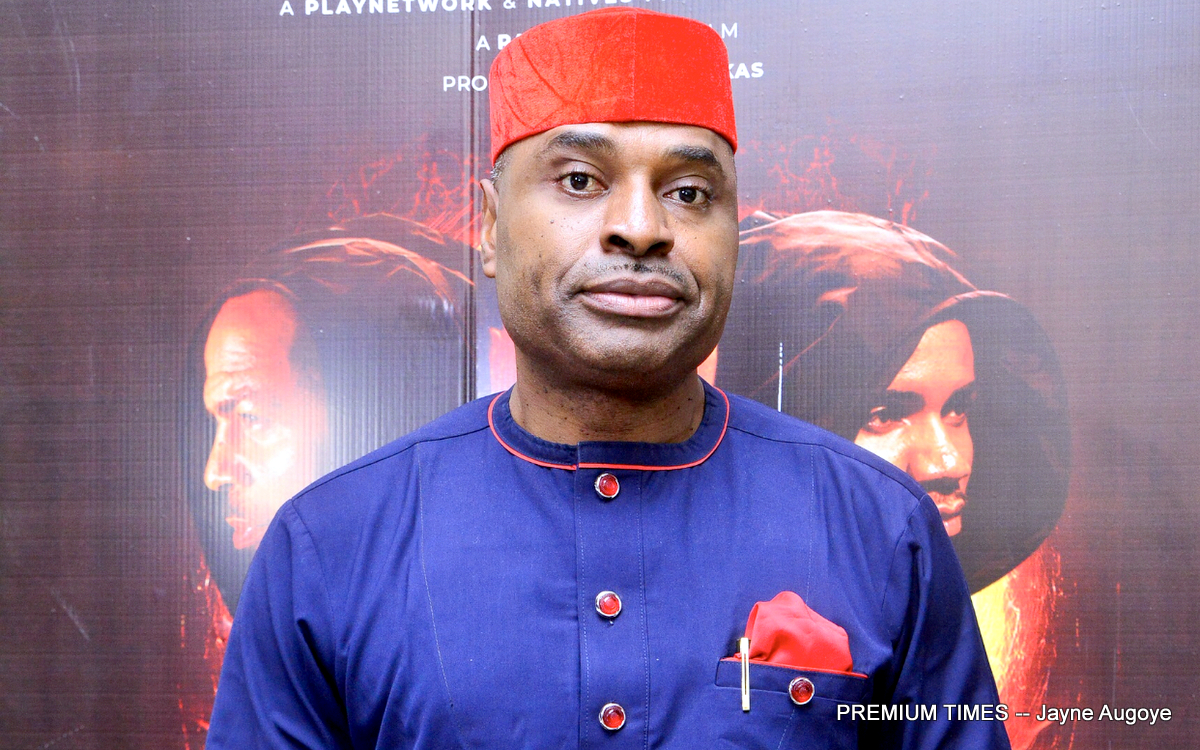
The tale of Pygmalion bears an uncanny resemblance to the professional and political journey of veteran Nigerian Nollywood actor-turned-politician Kenneth Okonkwo.
Many Millennials and members of Gen Z may be too young to know that long before The Black Book, Omoni Oboli’s Love in Every Word, or other contemporary Nollywood productions conquered our living rooms and found their way onto Netflix/Prime Video, there was Living in Bondage, the movie widely regarded as the foundation upon which modern Nollywood was built.
Released in two parts in 1992 and 1993 and directed by Chris Obi Rapu, it featured Kenneth Okonkwo alongside pioneers such as Kanayo O. Kanayo, Nnenna Nwabueze, and Bob-Manuel Udokwu. Shot in Igbo and distributed directly on VHS, Living in Bondage became a phenomenal commercial success and ushered in the home-video era of Nigerian filmmaking. But it was more than a movie. It was a cultural milestone that transformed storytelling in Nigeria and gave birth to what has since become one of the largest film industries in the world, next to Hollywood and Bollywood.

The story follows Andy Okeke, played masterfully by Kenneth Okonkwo. A struggling businessman desperate for success, Andy succumbs to the temptation of ill-gotten wealth. Under the influence of his friend Paul, he joins a secret cult and sacrifices his devoted wife, Merit, in exchange for riches. Though wealth eventually found him, so did guilt, torment, and destruction. Haunted by his actions, Andy was ultimately forced to confront his demons and seek redemption.
It would appear that, tragic and self-destructive as Andy Okeke was, Kenneth Okonkwo has come to admire the character so much that he now seems intent on bringing him to life, not on the silver screen, but in the treacherous corridors of Nigerian politics. Like Pygmalion, the relationship between creator and creation has come full circle.
We loved Andy Okeke because Kenneth brought authenticity and conviction to the role. Ironically, Living in Bondage emerged at a time when many young Nigerians had become seduced by the illusion that success could be attained through shortcuts. Those were the days of Ezego and his ilks. Advance-fee fraud, popularly known as 419, and ritual killings had become frighteningly prevalent. The tragic end of Andy Okeke served as a cautionary tale, a moral lesson against sacrificing principle on the altar of ambition.
Regrettably, the man who played that role now appears to be repeating the same fatal error his character made. Kenneth Okonkwo’s political trajectory is a study in dizzying inconsistency. From supporting Goodluck Jonathan’s PDP in 2014, to campaigning vigorously for Muhammadu Buhari and the APC in 2019, and later becoming one of Peter Obi’s most passionate advocates in the Labour Party, he has repeatedly reinvented himself with remarkable zeal. During the 2023 campaign, he portrayed Obi as Nigeria’s last hope and the face of a transformational project, only to later become one of his fiercest critics while aligning with the ADC and embracing Atiku Abubakar in 2026. In the process, he has also found himself battling defamation suits on multiple fronts.
The issue is not that Okonkwo changes political parties. In Nigeria, where parties are largely devoid of ideology, such movements are common. The greater concern is his tendency to turn disagreements into bitter personal wars. Yesterday’s heroes become today’s villains, allies become adversaries, and every bridge is burned with the same enthusiasm with which it was once crossed.
Politics, however, is not war. It is the art of managing differences without destroying relationships. It requires patience, restraint, and the ability to disagree without descending into bitterness. The greatest politicians understand that today’s opponent may become tomorrow’s ally. In a world rich with worthy examples, Kenneth appears to have modeled himself after the mercenary, weathercock politics exemplified by Reno Omokri and Femi Fani-Kayode, ever ready to play whatever script the moment demands.
For a man who desperately wishes to be perceived as a political heavyweight, his conduct betrays an impatience that borders on desperation. Through elevated diction and a fondness for grandiose language, he seeks to project influence and gravitas. But true statesmanship is not measured by vocabulary. It is earned through consistency, humility, restraint, and the discipline to build patiently.
Politics, like life, rewards those who understand that greatness is not attained overnight. One climbs the ladder one rung at a time. Yet Kenneth appears unwilling to learn the ropes. He seems eager to leap directly to the summit, bypassing the apprenticeship that every enduring political figure must undergo.
Perhaps therein lies the tragedy. Andy Okeke sought wealth without the patience that honest labor requires and paid a terrible price. Kenneth Okonkwo, in his political journey, appears equally impatient for relevance and influence. One can only hope that, unlike his famous alter ego, reality affords him the opportunity to recognize the danger before the final act is written.
For in the end, the greatest tragedy would be for the actor who once warned a generation about the perils of ambition without principle to become the living embodiment of the very lesson he helped teach.
Osmund Agbo is a medical doctor and author. His works include Black Grit, White Knuckles: The Philosophy of Black Renaissance and the novel The Velvet Court: Courtesan Chronicles. His most recent publications, Pray, Let the Shaman Die and Ma’am, I Do Not Come to You for Love, have just been released.