
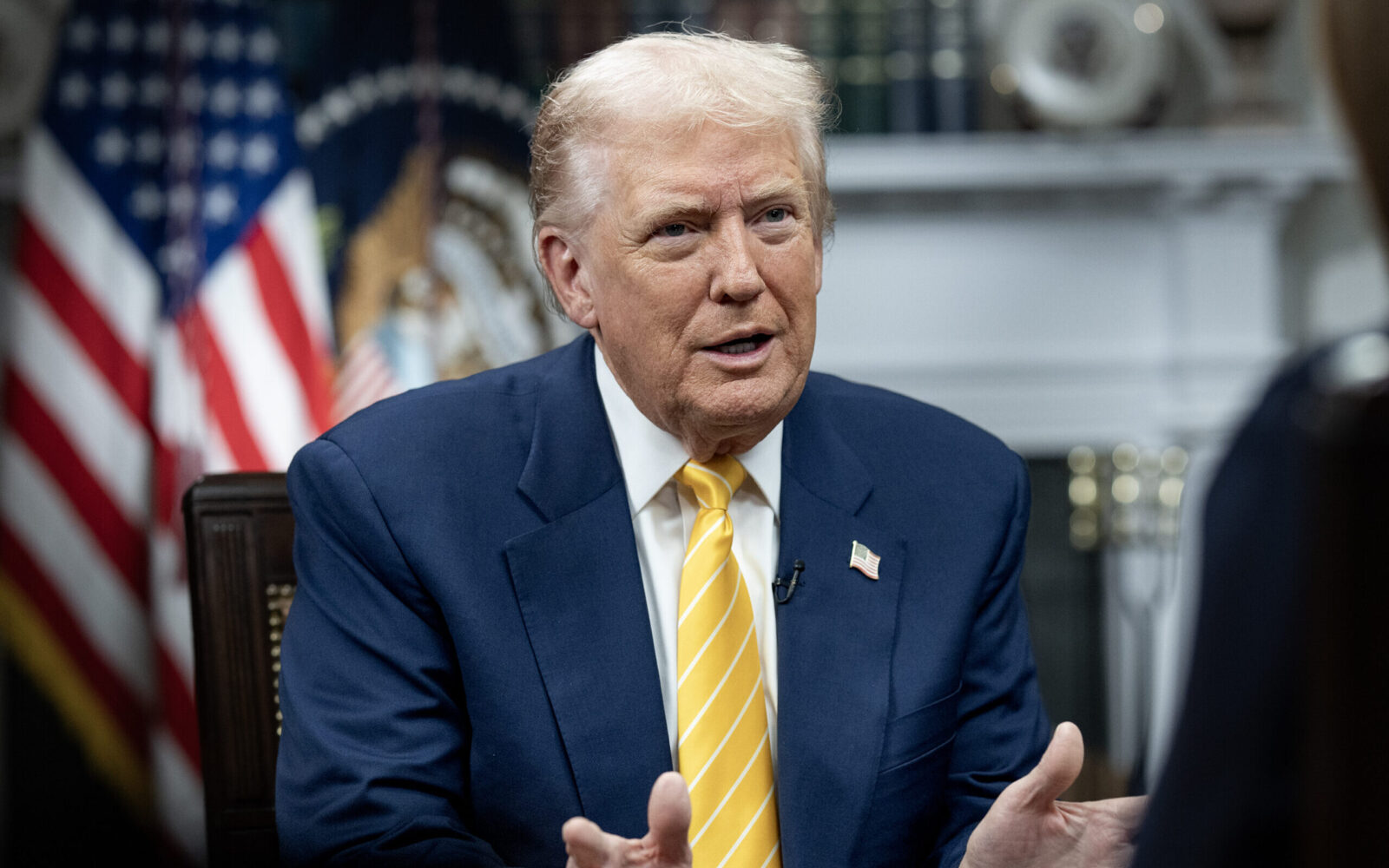


United States President Donald Trump, on Tuesday, criticised Israel’s military campaign in Lebanon, saying the conflict has dragged on for too long, caused excessive civilian casualties, and undermined broader diplomatic efforts in the Middle East.
According to a video reel published by Bloomberg, Mr Trump, who spoke at the sidelines of the G7 summit in France, said he was unhappy with how Israeli Prime Minister Benjamin Netanyahu’s government had handled the war against the Iran-backed Lebanese group, Hezbollah.
“Israel is fighting Hezbollah too long and too many people are being killed,” Mr Trump said. “You don’t have to knock down an apartment house every time you’re looking for somebody because there are a lot of people in those apartment houses, and they’re not all Hezbollah.”
Mr Trump said he suggested that Syria should take a greater role in confronting Hezbollah, arguing that Damascus could potentially deal with the group more effectively than Israel.
“I suggested to Israel to let Syria take care of Hezbollah,” Mr Trump said. “I think they do a better job…”

The US President also lamented Lebanon’s decline, describing it as a country that once produced leading intellectuals, doctors, lawyers and academics but has suffered from years of political instability, economic collapse and conflict.
Mr Trump’s remarks come as his administration pursues a broader diplomatic initiative with Iran, which he said could be jeopardised by a prolonged conflict in Lebanon. He argued that the war has cast a “negative light” on efforts to secure a larger regional agreement involving Tehran.
The comments also come amid efforts by Washington to consolidate a broader regional de-escalation process following a recent ceasefire framework and diplomatic engagement between the United States and Iran. The Trump administration has also supported efforts aimed at sustaining a truce between Israel and Hezbollah after months of hostilities, although tensions and sporadic attacks have continued.
The recent Middle East war started when Israel and the US launched an unprovoked attack on Iran on 28 February, prompting a massive retaliation by the latter.
Why is Israel fighting Hezbollah?
Israel says its military operations in Lebanon are aimed at stopping attacks by Hezbollah. PREMIUM TIMES reports that the group and Israel have been adversaries for decades.
According to historical archives, Hezbollah, an Iran-backed Lebanese Shiite movement founded during Lebanon’s civil war in the 1980s, has fought several conflicts with Israel, including the 2006 Lebanon War. The group maintains a substantial arsenal of rockets, missiles and drones and has engaged in repeated cross-border attacks and military confrontations with Israel over the past four decades.
The latest phase of fighting intensified after Hezbollah launched attacks against Israel as part of the broader regional confrontation involving Iran and its allied groups.
Israel argues that Hezbollah’s military infrastructure near its northern border poses a direct threat to Israeli communities and that military action is necessary to prevent future attacks.
The wider Middle East war
The current regional conflict grew out of a broader confrontation between Israel and Iran, as well as Iran-backed armed groups across the Middle East.
Israel has faced attacks from several fronts, including Hezbollah in Lebanon, Hamas in Gaza, the Houthis in Yemen, as well as Iran itself through direct missile and drone attacks.
READ ALSO: Trump cancels planned strike on Iran
Analysts often describe these groups as part of Iran’s “Axis of Resistance,” a network of allied organisations supported through funding, weapons and training from Tehran.
The military situation remains fluid. In Lebanon, Israeli forces have conducted airstrikes and ground operations against Hezbollah positions, while Hezbollah has continued rocket, missile and drone attacks against Israel. Diplomatic efforts have periodically produced temporary reductions in violence, but clashes have continued.
At the same time, Israel has faced missile and drone attacks from Yemen’s Houthis and has been involved in confrontation with Iran during the broader regional conflict. Military analysts describe the situation as one of the most complex multi-front conflicts Israel has faced in decades.
Recently, Mr Trump announced that Israel and Hezbollah had agreed to scale back hostilities following US-mediated contacts, although tensions and sporadic attacks have persisted. The truce forms part of Washington’s wider diplomatic efforts to prevent a broader regional escalation and to create conditions for continued engagement with Iran.